
Solar Inverter Replacement
Replacing a failed or ageing inverter, matched to the array that is already on the roof.
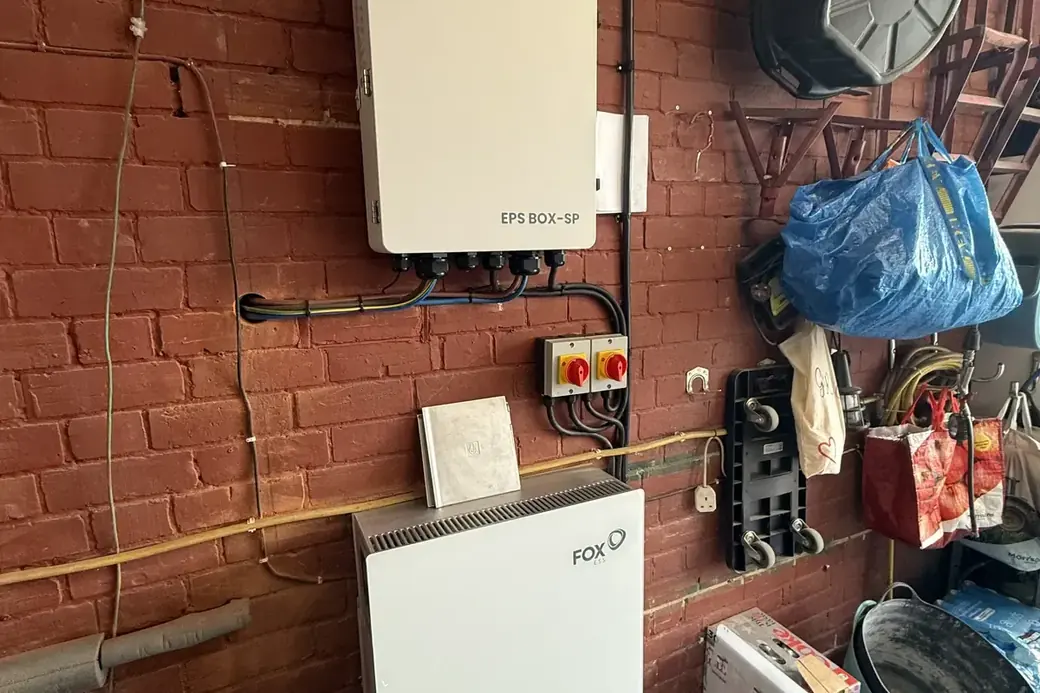
The component most likely to need changing
An array of panels sitting still on a roof degrades slowly and predictably. The inverter is doing something quite different: switching at high frequency, all day, every day, in a box that gets hot, in a location that is often the hottest part of the house.
That is why the inverter is normally the first significant replacement in a system’s life. It is not a sign that anything was done badly. It is the nature of the component.
Confirming it is actually the inverter
Before anything is ordered, we establish that the inverter is the fault and not the messenger. A unit reporting an insulation fault is frequently reporting a genuine problem in the array. A unit that will not start on damp mornings may be responding to water in a rooftop isolator. A unit showing no display at all may have lost its AC supply.
Replacing an inverter that was telling the truth about a DC-side fault gets you a new inverter reporting the same error.
Matching the replacement to the array
The array is fixed, so the inverter has to fit it. Three numbers govern the choice.
- Maximum input voltage. Panel open-circuit voltage rises as temperature falls. The string voltage on a cold, bright winter morning is higher than its nameplate figure, and it must stay below the inverter limit with margin. This is the calculation most often skipped, and exceeding it damages equipment.
- MPPT voltage range. The inverter tracks the array’s maximum power point within a window. A string sitting near the bottom of that window on a hot day will underperform even though nothing is faulty.
- Input current and MPPT count. An array split across two orientations needs two independent trackers. Putting east and west strings onto one input costs generation every day of the year.
Where an old array has an awkward string count, reconfiguration is sometimes possible. Where it is not, the replacement is chosen around the array rather than the array around the replacement.
Where optimisers complicate things
Systems with power optimisers or microinverters are less flexible. Optimisers communicate with a specific inverter family over the DC cable, so a replacement generally has to come from the same manufacturer. Where that manufacturer no longer makes a compatible unit, the choice becomes removing the optimisers entirely — which means roof access and a re-examination of the shading that justified them — or replacing them alongside the inverter.
We check what is on the roof before quoting, because this changes the cost substantially.
Like-for-like, or a hybrid
A like-for-like replacement restores the system to what it was, at the lowest cost, in the shortest time.
A hybrid replacement does the same and adds a DC battery input for later. If storage is a possibility within the next few years, this is usually the better sequencing: you replace the inverter once instead of twice. The trade-off is a higher price now and a tie to the battery range that manufacturer supports.
Notification and recommissioning
Capacity is what the network operator cares about. A replacement of similar rating does not change the declared capacity of the installation. A larger unit might, and where it crosses the 16A per phase threshold — around 3.68kW single phase — it moves from a G98 notification to a G99 application requiring approval before the work, not after.
Once fitted, the system is recommissioned properly: strings tested, insulation resistance measured, protection settings confirmed, monitoring reconnected and set up on your phone, and certification issued for the work. We also make sure the new unit is registered in your name with the manufacturer, which is the step most often forgotten and the one you need if it fails.
Who this is for
- Systems where the inverter has failed outright
- Ageing units showing repeated faults, derating or intermittent shutdowns
- Owners planning to add storage who need a hybrid unit anyway
- Systems where the original manufacturer no longer supports the model
What is included, and what is not
Included as standard
- Confirmation that the inverter is the actual fault before it is replaced
- Survey of the existing array, string configuration and panel specification
- Voltage window and current checks to confirm compatibility with the replacement
- Options presented for like-for-like replacement or an upgrade to a hybrid unit
- Removal and responsible disposal of the old unit
- Installation, DC and AC reconnection, isolation and labelling
- Monitoring reconfiguration and app setup on your devices
- Recommissioning, testing, certification and warranty registration
Not included
- Repair of unrelated faults found in the array during the survey
- Consumer unit work where the existing board is not suitable
- Battery supply where a hybrid upgrade is chosen, quoted separately
- Recovery of historical generation data from the old inverter or its portal
Anything in this column that your property turns out to need is identified at survey and priced in the written quotation, not raised later as a variation.
Timescale
A straightforward replacement is a half to full day, subject to the replacement unit being available.
What affects the cost
| Factor | Why it matters |
|---|---|
| Rating of the replacement in kW and the number of MPPT inputs required | Assessed at survey and reflected in the fixed written quotation. |
| Like-for-like string inverter or an upgrade to a hybrid | Assessed at survey and reflected in the fixed written quotation. |
| Whether existing optimisers or microinverters constrain the choice | Assessed at survey and reflected in the fixed written quotation. |
| Position of the inverter and how accessible it is | Assessed at survey and reflected in the fixed written quotation. |
| Whether cabling, isolators or protection need replacing at the same time | Assessed at survey and reflected in the fixed written quotation. |
| Any monitoring hardware needed to restore data logging | Assessed at survey and reflected in the fixed written quotation. |
New to this? Start with how domestic solar works and what battery storage changes, then come back to the detail.
Common questions
Why do inverters fail before panels do?
Because they are the only part of the system doing continuous high-frequency electronic work in a variable thermal environment. Capacitors, cooling fans and semiconductor switches all age with heat and cycling. A well-sited inverter in a cool, ventilated position lasts considerably longer than the same unit in an unventilated loft, which is why siting is part of the replacement decision.
Can I fit any inverter to my existing panels?
No. The replacement must accept the string as it is wired. That means the array open-circuit voltage on the coldest expected morning must stay inside the inverter maximum input voltage, the operating voltage must sit within its MPPT tracking range, and the string current must be within its input rating. Where the numbers do not work, the strings can sometimes be reconfigured; sometimes a different inverter is simply required.
Should I upgrade to a hybrid inverter while it is being changed?
It is worth considering if storage is anywhere in your plans. Replacing a string inverter with a hybrid now costs less than replacing a working string inverter later, and it leaves the battery as a straightforward addition. If you are certain you will never add storage, a like-for-like replacement is the cheaper answer.
Does replacing the inverter affect my MCS certificate or export tariff?
Your original MCS certificate relates to the installation as first commissioned and is not reissued for a repair. What matters is that the replacement does not increase the declared capacity without the network operator being told. A like-for-like change is straightforward; a larger unit may require notification or approval, and we handle that as part of the work.
What happens to my old generation data?
It usually stays with the old manufacturer portal and does not transfer. If the history matters to you — for a Feed-in Tariff record or your own curiosity — export it before the change rather than after, because access can end when the unit stops reporting.
Related services
- Solar panel repairsFault diagnosis and repair on arrays that have stopped working, or never quite worked properly.
- Battery retrofitAdding storage to a solar system that is already on the roof, without disturbing what works.
- System monitoring and optimisationGetting proper data out of a system, then changing its settings so it earns more from the same hardware.
- Solar health checkA one-off independent assessment of an existing system, with a written report on its condition and performance.
The technology behind it
- InvertersWhat the inverter does, how MPPT works, and how the four architectures compare honestly against each other.
- String invertersThe conventional central inverter: how strings are designed, where it is the best value, and where it is the wrong choice.
- Hybrid invertersA single unit managing array, battery and house demand, and when fitting one is worth the extra cost.
- MicroinvertersOne inverter per panel mounted on the roof: what per-panel conversion buys, and what it costs.
Property and roof guides
See it on a real installation
Further reading
- String inverter vs microinvertersHow central and module-level conversion differ in shading tolerance, servicing, monitoring and failure behaviour.
- Adding a battery to existing solarAC coupling versus replacing the inverter, what a retrofit survey checks, and the network paperwork it can trigger.
- G98 and G99 DNO applicationsThe 16A per phase threshold, what notification and approval each route requires, and how it affects your install date.
Where we work
Information reviewed on 2026-08-23.
Book a free design and quotation
Tell us about the property and we will arrange a survey, then issue a written design and fixed quotation before any work is agreed.
Enquire about inverter replacement
No obligation. We will review the details, come back to arrange the next step, and issue a written design and fixed quotation before anything is agreed.
Prefer to talk? Call 0118 227 7444.