
Bath Road, Reading
7.125kWp with Anker SOLIX storage on Bath Road, Reading
Fifteen AIKO 475W panels laid out at around 20 degrees, paired with an 8kW Anker SOLIX X1 hybrid inverter and 10kWh of storage sized to keep most of the generation on site.
- Solar PV and battery storage
- 7.125 kWp — 15 x AIKO 475W
- 8 kW Anker SOLIX X1 hybrid
- 10 kWh Anker SOLIX storage
Photographs from the installation
Every photograph below is from this installation on Bath Road.
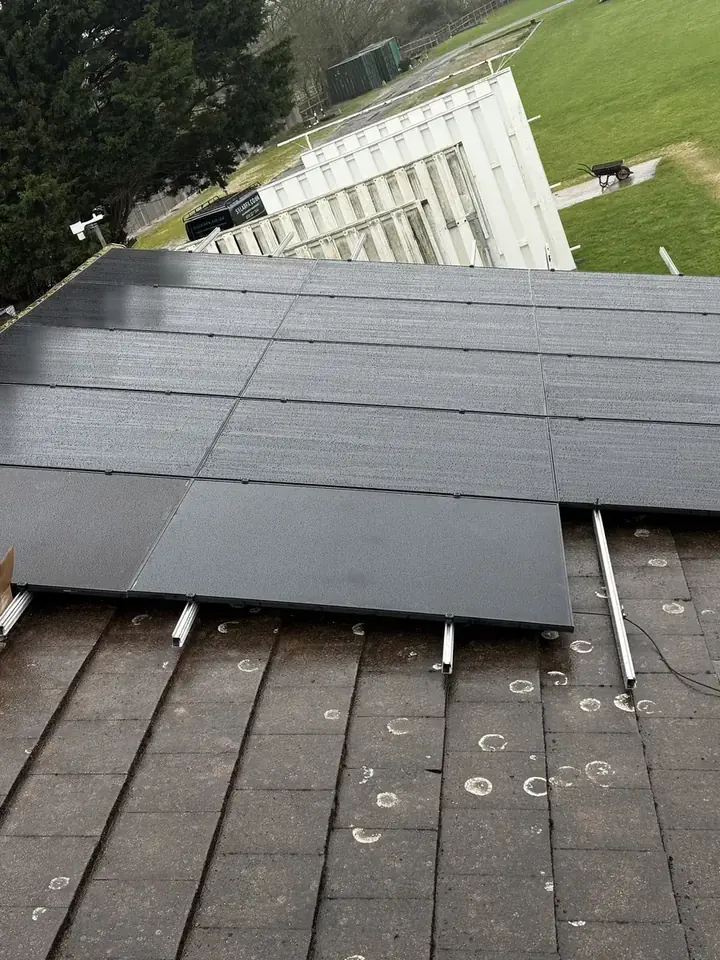
The array going down across the roof, set at roughly 20 degrees to make use of the run available. 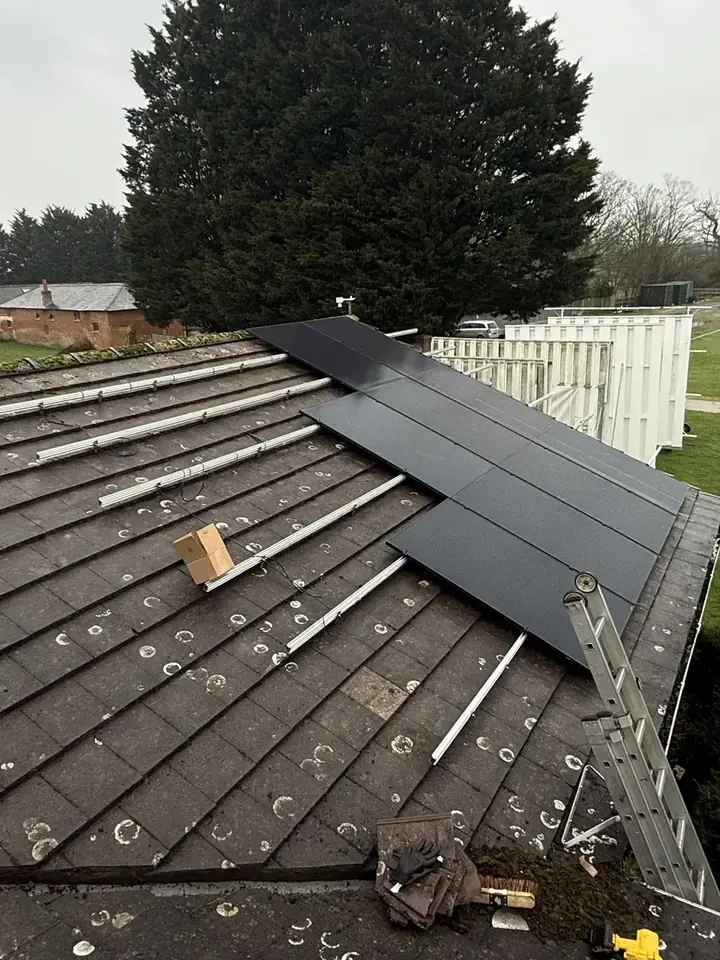
Rails and fixings set out before the panels. The rail run decides the finished line of the array, so it gets levelled first. 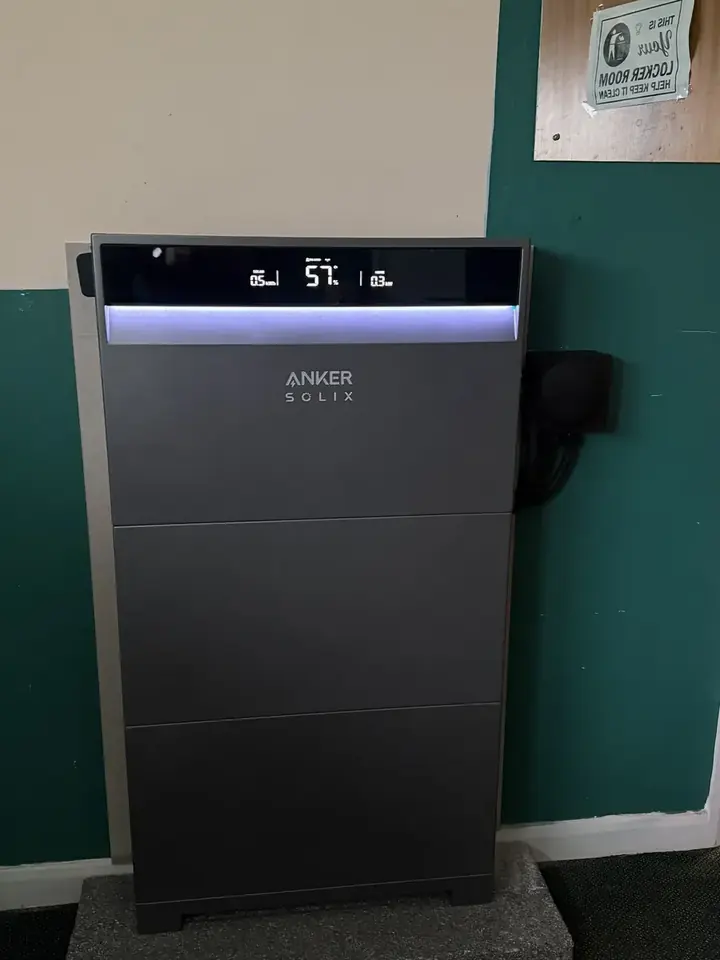
The Anker SOLIX X1 storage — two X1-B5-H modules giving roughly 10kWh of usable capacity. 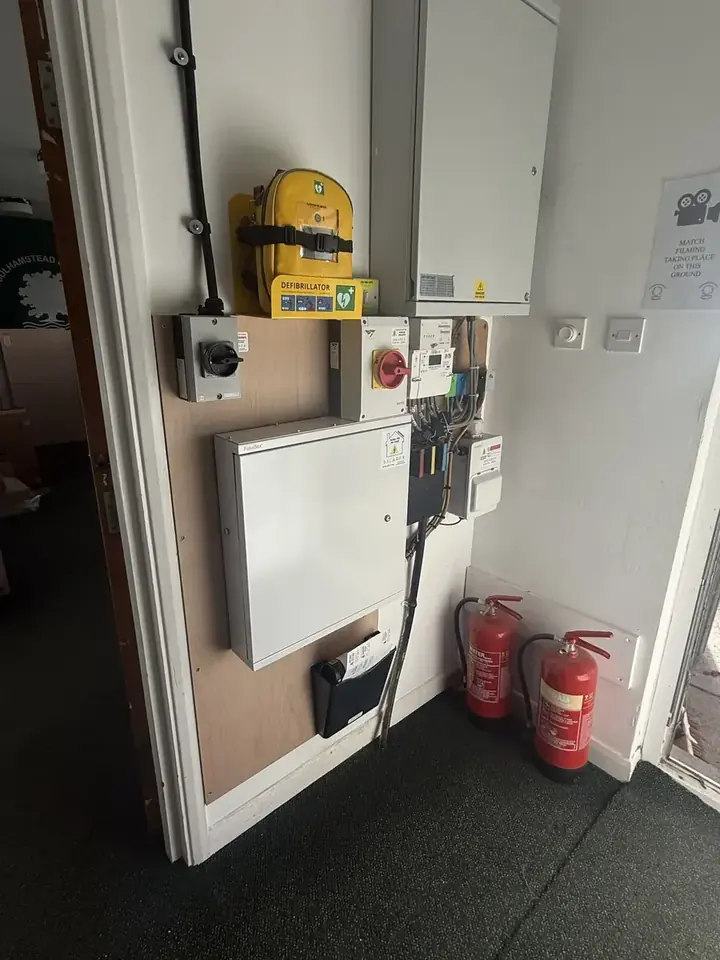
The hybrid inverter and distribution equipment mounted together on a board, with clearance to work around them. 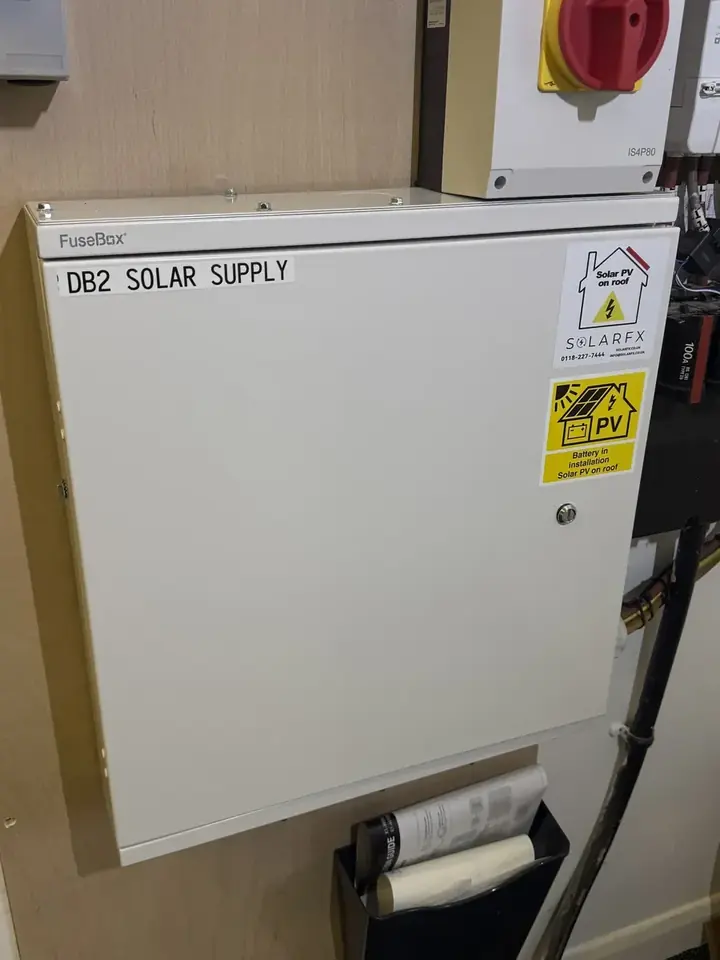
The solar supply board and isolator, labelled so the next person to open it knows what they are looking at.
The brief
Generation and storage sized together rather than separately: an array big enough to be worth having, and a battery big enough that the electricity produced at midday is still available when it is actually wanted.
The array
Fifteen AIKO A475-MAH54Mw 475W panels were installed, giving 7.125 kWp of installed capacity.
The panels were set at approximately a 20-degree inclination, using the available roof area effectively while keeping a clean line across the run. High-output modules matter here — the same capacity in older panels would have needed noticeably more roof.
The Anker SOLIX system
The array was paired with an Anker SOLIX X1 hybrid energy storage system: an 8 kW X1-H8K-T hybrid inverter managing the flow between the array, the building and the grid, with two X1-B5-H battery modules giving approximately 10 kWh of usable storage.
A hybrid inverter handles the array and the battery in one unit, which keeps the installation simpler than bolting an AC-coupled battery onto a string inverter later.
How the system works
In daylight, generation is used on site first. Surplus above immediate demand charges the 10 kWh battery. Only once the battery is sufficiently charged does anything go back to the grid.
When generation drops — late afternoon, evening, poor weather — stored electricity is used instead of imported electricity. That shift is where most of the value sits, because the gap between what you pay to import and what you are paid to export is where solar economics are actually decided.
Expected performance
The system is estimated to generate approximately 6,348 kWh a year.
The design calculations put self-consumption at around 63% of generation without storage. With the 10 kWh battery included, those same calculations estimated roughly 3,995 kWh a year self-consumed, and around 80% independence from grid electricity against the assumed consumption profile.
Those are design figures, not measurements. Real generation and real savings move with weather, with how much electricity the building actually uses, and with how the battery is set up and operated.
Equipment and warranties
The system uses AIKO panels and Anker SOLIX storage throughout. The specified equipment carries a 15-year panel product warranty and a 30-year panel performance warranty, with 10 years on both the inverter and the battery.
Warranty length is worth reading properly: a product warranty covers the panel itself, while a performance warranty covers how much output it still produces decades in.
The result
A 7.125 kWp array with 10 kWh of storage behind it, designed so that the majority of what the roof generates is used on site rather than exported for a fraction of its value.
We work across this area regularly. What we install in Reading.
Related services
- Solar and battery systemsPanels, hybrid inverter and storage designed as one system, on one scaffold, with one commissioning.
- Battery storage installationHome battery systems sized against your consumption, sited properly and commissioned with the tariff in mind.
- Solar panel installationSurvey, design, roof works, electrical works and commissioning for a domestic solar PV system.
The technology behind it
- Hybrid invertersA single unit managing array, battery and house demand, and when fitting one is worth the extra cost.
- N-type and TOPCon panelsThe cell technology behind the current generation of high-output modules, and what it changes in practice.
- Mounting systemsHooks, rails, clamps and fixings — the part of the installation that decides whether the roof stays watertight.
Property and roof guides
Further reading
- What size battery do I need?How evening consumption, array size, tariff and inverter power rating together decide usable battery capacity.
- How much can solar panels save?Where the savings actually come from, and the assumptions behind the numbers people quote.
- Smart Export Guarantee explainedHow export payments work, which tariffs pay best, and what you need fitted to claim them.
Where we work
Want something similar?
Every system is designed around the property in front of us. Tell us the postcode and what you are trying to achieve.